


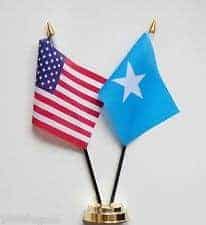
THE UNITED STATES has maintained an arms-length diplomatic relationship with Somalia since two American Black Hawk helicopters were shot down in Mogadishu in 1993. But an increase in activity in recent years is set to culminate this weekend, with the quiet opening of a renovated and expanded building that will apparently serve as an unofficial U.S. embassy or consulate in Mogadishu, according to diplomatic and other sources in the city. The facility will allow for a permanent diplomatic presence in the country, a place for the U.S. to host meetings and for limited staff to be based.
U.S. officials are reluctant to discuss the building and its intended uses; the government seems keen to indicate it is neither an embassy nor a consular office. However, in a sign of the apparent importance of the building, the new U.S. ambassador to Somalia, Donald Yamamoto, who is based in neighboring Kenya, arrived in Mogadishu this week and is expected to formally inaugurate the facility on Saturday. Despite requests, the State Department would not allow an Intercept reporter to attend the opening ceremony.
The U.S. has not had an embassy or consulate in Somalia since 1991, when Americans were evacuated amid an anti-government uprising that catalyzed the complete collapse of the Somali state and deepened a long and bloody civil war. Relations between the U.S. and Somalia took a historic turn two years later with the “Black Hawk Down” incident, which took place during a U.S.-led military intervention precipitated by food shortages and political chaos. In that famous incident, two U.S. military helicopters were shot down, and a total of 18 American soldiers were killed during a raid to capture allies of a Somali warlord, Mohamed Farah Aidid. The Black Hawks crashed into Bakara, the main market in Mogadishu, sparking a 15-hour gun battle; the bodies of some of the U.S. soldiers were dragged through the streets. Those gory images and the subsequent national horror have since shaped U.S. policy abroad, influencing former President Bill Clinton’s decision not to put boots on the ground to intervene in the 1994 genocide in Rwanda or in Bosnia.
The U.S. building is located in Mogadishu’s equivalent of what was known as the “Green Zone” in Baghdad during the U.S. occupation of Iraq. At the moment, the vast majority of foreigners who come to the Somali capital do not even leave the massive airport complex-cum-military base that stretches across a section of the Mogadishu shoreline. The compound, secured by blast walls, is protected by the African Union Mission in Somalia and is entirely segregated from the rest of the city. Even Somali politicians entering the compound have to go through airport-style security managed by Ugandan soldiers. Along with the United Nations camp and security contractors, the U.K. and the EU keep embassies inside the airport. Turkey, Saudi Arabia, and the Gulf States have embassies in the city proper (a move greatly appreciated by the public, many of whom find it offensive that foreigners would come to work in their country but never actually leave the airport compound).